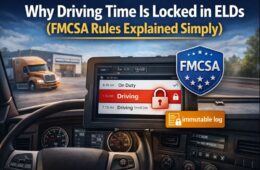
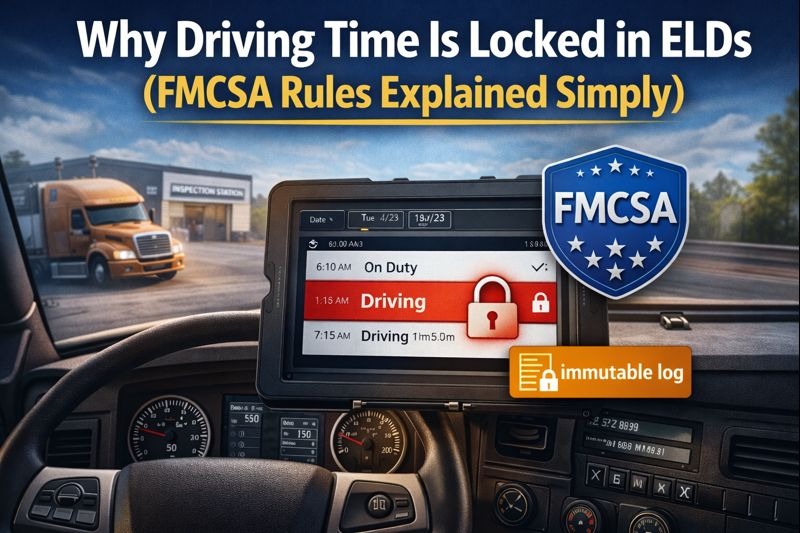
Electronic Logging Devices (ELDs) ensure accurate and tamper-resistant recording of Hours-of-Service (HOS) data. One of the most critical—and often misunderstood—features of ELDs is that they lock driving time and prevent drivers from editing it. This restriction is not a software limitation imposed by ELD providers. It is a direct requirement…
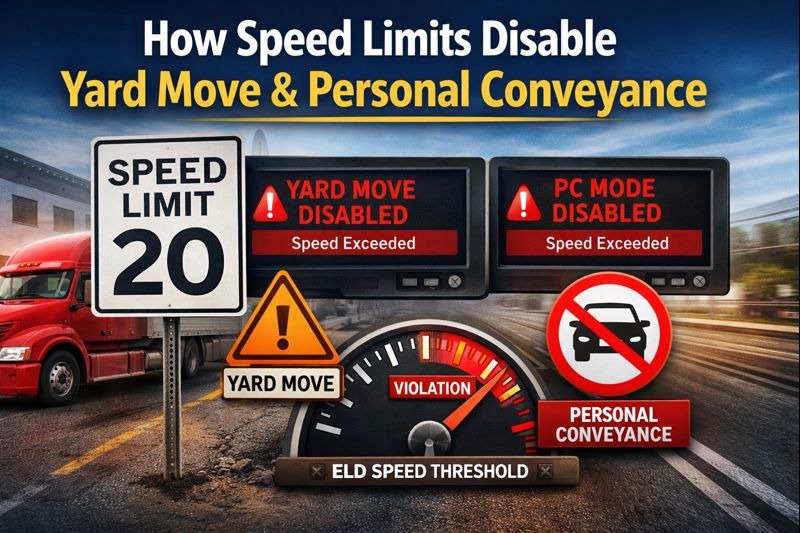
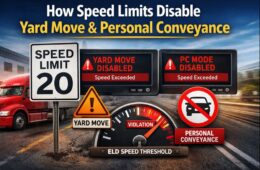
Many drivers assume that switching to Yard Move or Personal Conveyance (PC) on their ELD is enough to stay compliant. But there’s a hidden factor that often causes confusion—and violations: speed limits. Most electronic logging devices automatically disable yard move or personal conveyance when a speed threshold is exceeded, even…
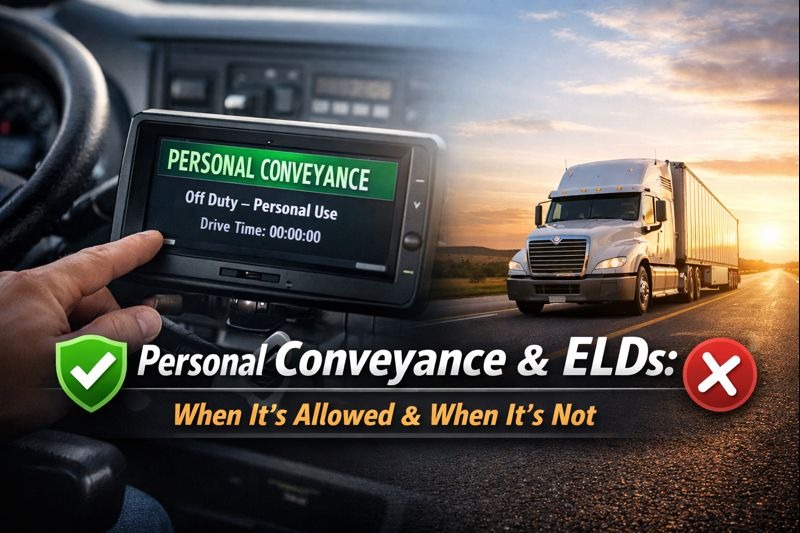
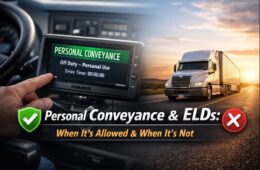
Electronic Logging Devices (ELDs) have transformed how commercial drivers track Hours of Service (HOS). One of the most misunderstood areas within ELD compliance is personal conveyance (PC)—specifically, when it is allowed, how it should be recorded, and when it crosses the line into a violation. This guide breaks down personal…
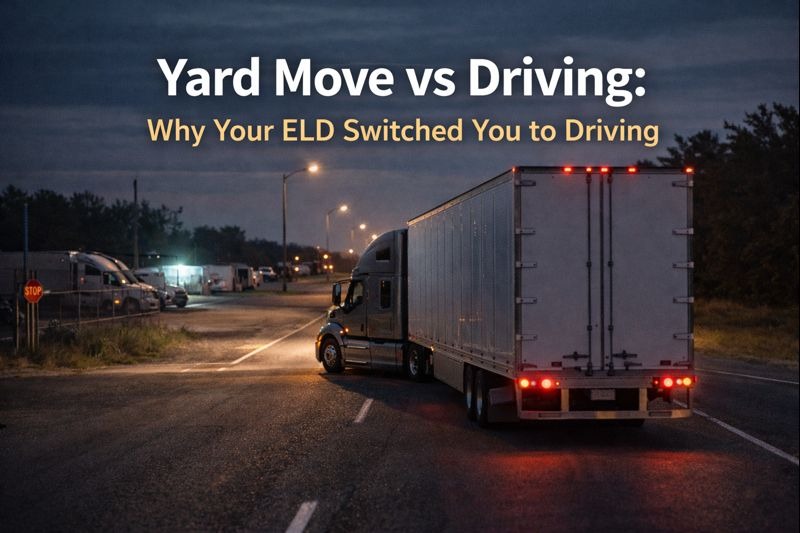
Few things frustrate drivers more than correctly selecting yard move, only to discover later that the ELD switched the status back to driving. This issue is extremely common and often misunderstood. When it happens, it can lead to inaccurate logs, lost hours, and potential compliance risks. In this guide, we’ll…
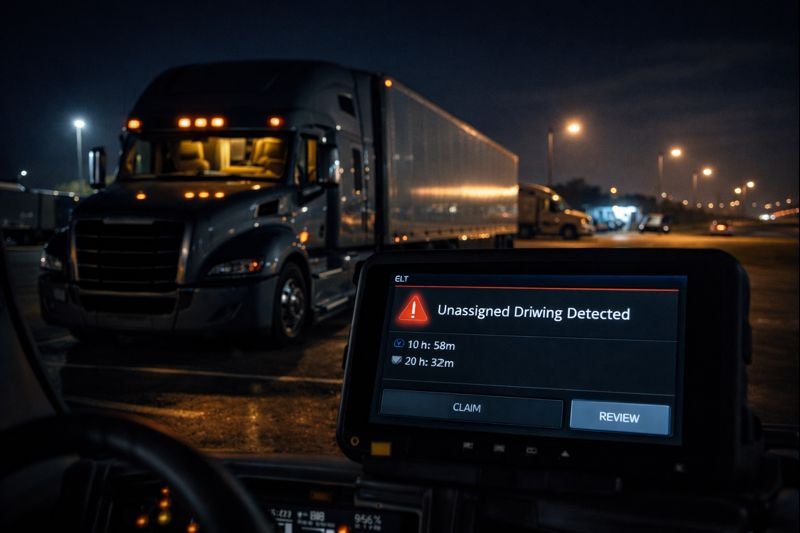
Unassigned driving is one of the most frequent issues flagged in electronic logging device (ELD) systems—and one of the easiest ways for carriers to fall out of compliance if it’s not handled correctly. Whether caused by a simple login mistake or a system configuration issue, unassigned driving ELD records demand…
The split sleeper berth provision offers drivers flexibility under the Hours of Service (HOS) regulations, particularly for long-haul and irregular schedules. When applied correctly, it can improve trip planning and reduce unnecessary downtime. However, it is also one of the most frequently misapplied HOS rules. Even minor misinterpretations can result…
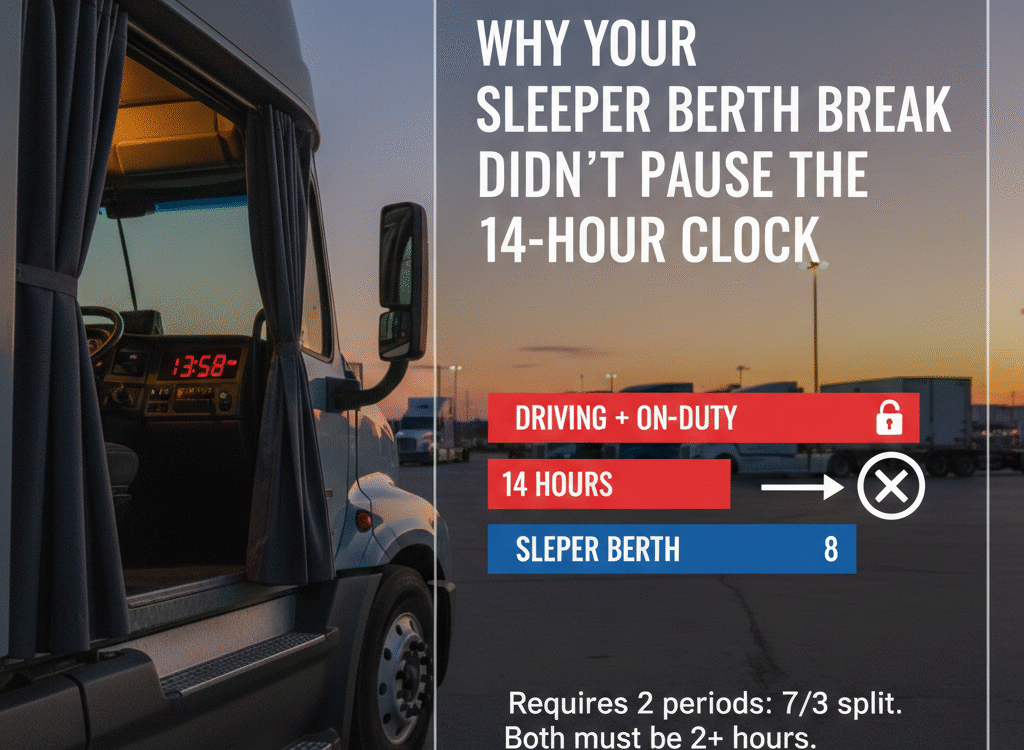
Many drivers assume that spending time in the sleeper berth automatically pauses the 14-hour driving window. In reality, this misunderstanding is a leading cause of logbook violations. The sleeper berth 14 hour rule is very specific, and when it is misapplied, drivers quickly accumulate hidden Hours of Service (HOS) violations.…
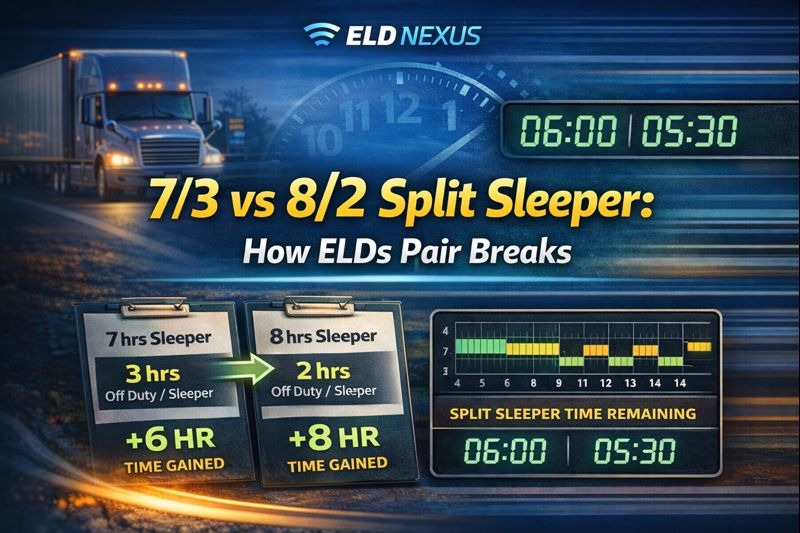
The split sleeper rule becomes even more confusing when drivers hear terms like 7/3 split sleeper and 8/2 split sleeper. Many ask the same question: How does my ELD know which breaks to pair—and why does my available time change afterward? The answer lies in split sleeper calculation logic built…
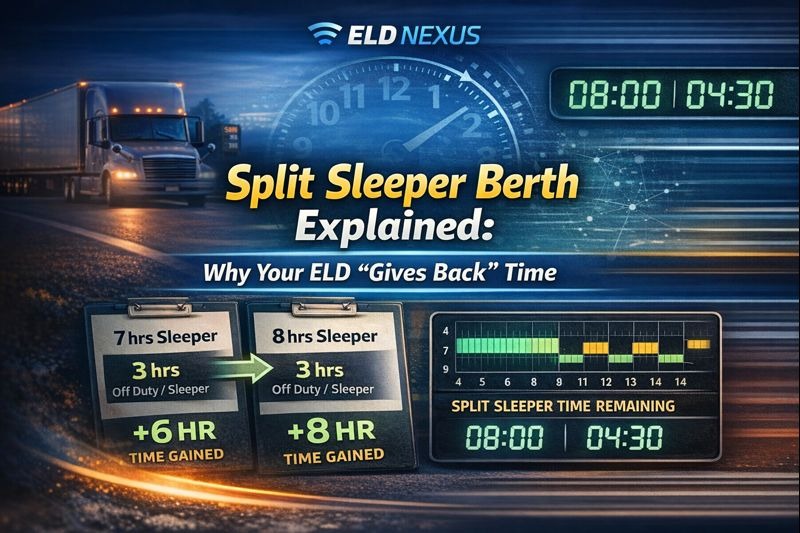
If you’ve ever checked your ELD and noticed extra drive time suddenly reappear after taking a sleeper berth break, you’re not alone. Many drivers are confused by how the split sleeper berth rule works—and why it feels like the ELD is “giving back” hours. The truth is, this isn’t a…
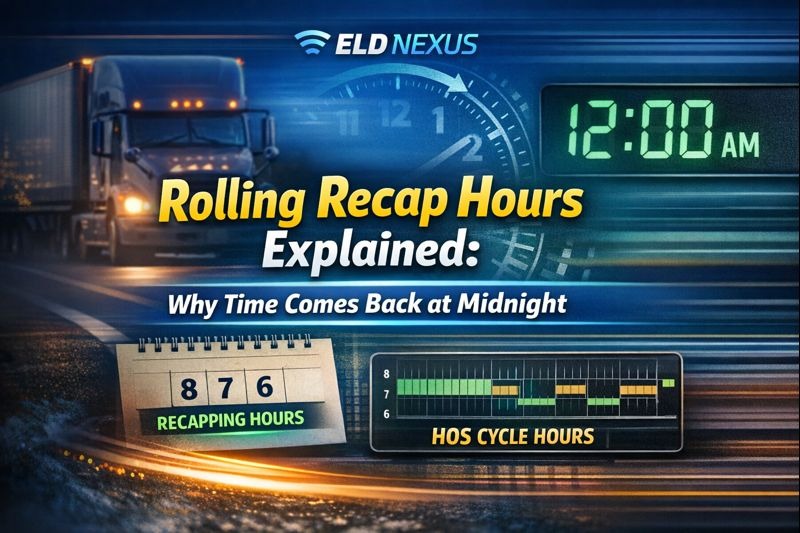
Understanding recap hours HOS is one of the most confusing—but most powerful—concepts in Hours of Service (HOS) compliance. Many drivers glance at their Electronic Logging Device (ELD) at midnight and wonder: Why did my available drive time suddenly increase? The answer lies in rolling cycle hours and the way recap…