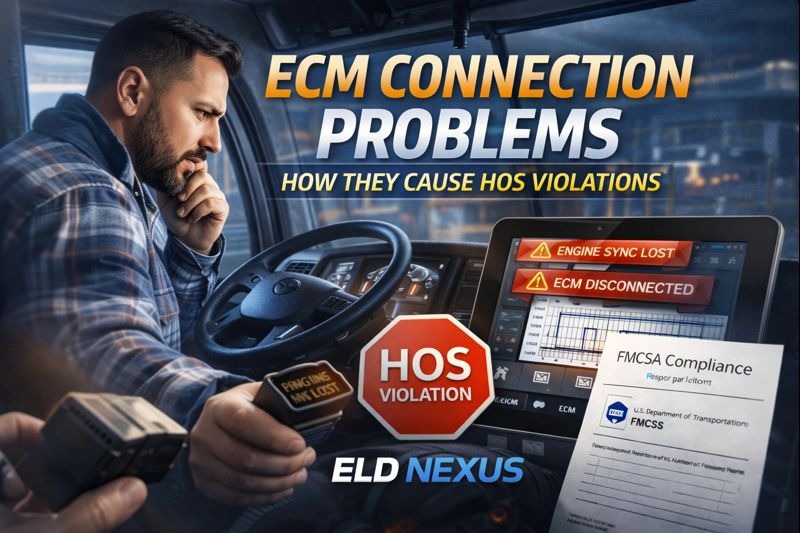
Electronic Logging Devices (ELDs) depend on reliable communication with a vehicle’s Engine Control Module (ECM) to record accurate Hours of Service data. When ECM connection problems occur, fleets using ELD systems may face incomplete logs, inspection delays, and costly HOS violations.
Solutions like ELD Nexus are designed to monitor engine connectivity in real time and help fleets identify and resolve ECM-related issues before they impact compliance.
What Is an ECM Connection and Why It Matters
The ECM is the vehicle’s onboard computer that provides critical engine data to the ELD, including:
- Engine power status
- Vehicle movement
- Speed and distance traveled
ELD Nexus uses this ECM data to automatically record driving time in compliance with FMCSA regulations. Any disruption in this connection can compromise log accuracy and regulatory compliance.
Common ECM Connection Problems That Affect ELDs
1. Engine Sync Lost
An engine sync lost alert occurs when the ELD temporarily loses communication with the ECM.
Common causes include:
- Loose or worn diagnostic cables
- Vehicle vibration affecting connectors
- Power interruptions
- Outdated ELD firmware
How it causes HOS violations:
When engine data is unavailable, driving time may not be recorded correctly, leading to missing or inaccurate logs during inspections.
How ELD Nexus helps:
ELD Nexus provides real-time alerts so drivers and fleet managers can address engine sync issues immediately.
2. ECM Disconnect
An ECM disconnect occurs when the ELD loses connection to the engine for an extended period.
Typical causes include:
- Improper ELD installation
- Faulty OBD, J1939, or J1708 ports
- Electrical system issues
- Accidental or unauthorized unplugging
How it causes HOS violations:
Extended disconnects can result in unassigned drive time or manual log entries, which may trigger FMCSA violations.
How ELD Nexus helps:
ELD Nexus logs disconnect events and maintains a clear audit trail, helping fleets demonstrate compliance during inspections.
3. Intermittent ECM Connection Problems
Intermittent ECM connection problems are among the most difficult to detect.
Warning signs include:
- Repeated connection alerts
- Delayed status changes
- Inconsistent driving data
How it causes HOS violations:
Irregular data can lead to overlapping duty statuses or incorrect HOS calculations.
How ELD Nexus helps:
ELD Nexus continuously monitors ECM connectivity and flags inconsistencies before they escalate into compliance issues.
ECM Connection Problems Lead to HOS Violations
When ECM data is compromised, ELDs may:
- Fail to switch automatically to driving mode
- Record incorrect duty statuses
- Produce incomplete or unverifiable logs
FMCSA regulations require ELDs to capture driving time directly from the ECM. Without a stable connection, fleets are exposed to HOS violations and enforcement actions.
Why Reliable ECM Connectivity Is Essential
Experience
Fleet managers using ELD Nexus consistently report fewer inspection delays when ECM connectivity is actively monitored.
Expertise
ELD Nexus is built around FMCSA technical requirements, ensuring accurate engine synchronization across multiple vehicle types.
Authoritativeness
FMCSA mandates engine-based data capture for HOS compliance, making ECM connectivity non-negotiable.
Trustworthiness
ELD Nexus maintains secure, transparent logs with full event history to support audits and roadside inspections.
How Fleets Can Prevent ECM Connection Problems
- Ensure professional ELD installation
- Use FMCSA-compliant hardware like ELD Nexus
- Perform routine cable and port inspections
- Train drivers to recognize ECM alerts
- Keep firmware and software updated
Preventive maintenance reduces downtime and protects compliance.
What to Do If ECM Connection Problems Occur
If ECM connection problems are detected:
- Document the issue immediately in the ELD Nexus system
- Follow FMCSA ELD malfunction procedures
- Use paper logs if required during repairs
- Resolve the issue as soon as possible
Proper documentation helps protect fleets from violations during unavoidable technical failures.
Final Thoughts
ECM connection problems, including engine sync lost and ECM disconnect events, are a leading cause of HOS violations across the trucking industry. Without reliable engine data, even compliant drivers can face enforcement issues.
By using a reliable solution like ELD Nexus, fleets gain better visibility into ECM connectivity, faster issue resolution, and stronger FMCSA compliance.
Frequently Asked Questions (FAQs)
What causes ECM connection problems?
Loose cables, faulty ports, improper installation, power interruptions, or outdated software are common causes.
What does “engine sync lost” mean in ELD Nexus?
It indicates a temporary loss of communication between ELD Nexus and the vehicle’s ECM.
Can ECM disconnect issues lead to HOS violations?
Yes. Missing or incorrect engine data can result in inaccurate logs and HOS violations.
Is an ECM disconnect considered an ELD malfunction?
Yes. FMCSA classifies ECM disconnects as ELD malfunctions that require corrective action.
How does ELD Nexus help prevent ECM-related HOS violations?
ELD Nexus monitors ECM connectivity in real time, provides alerts, and maintains audit-ready records.